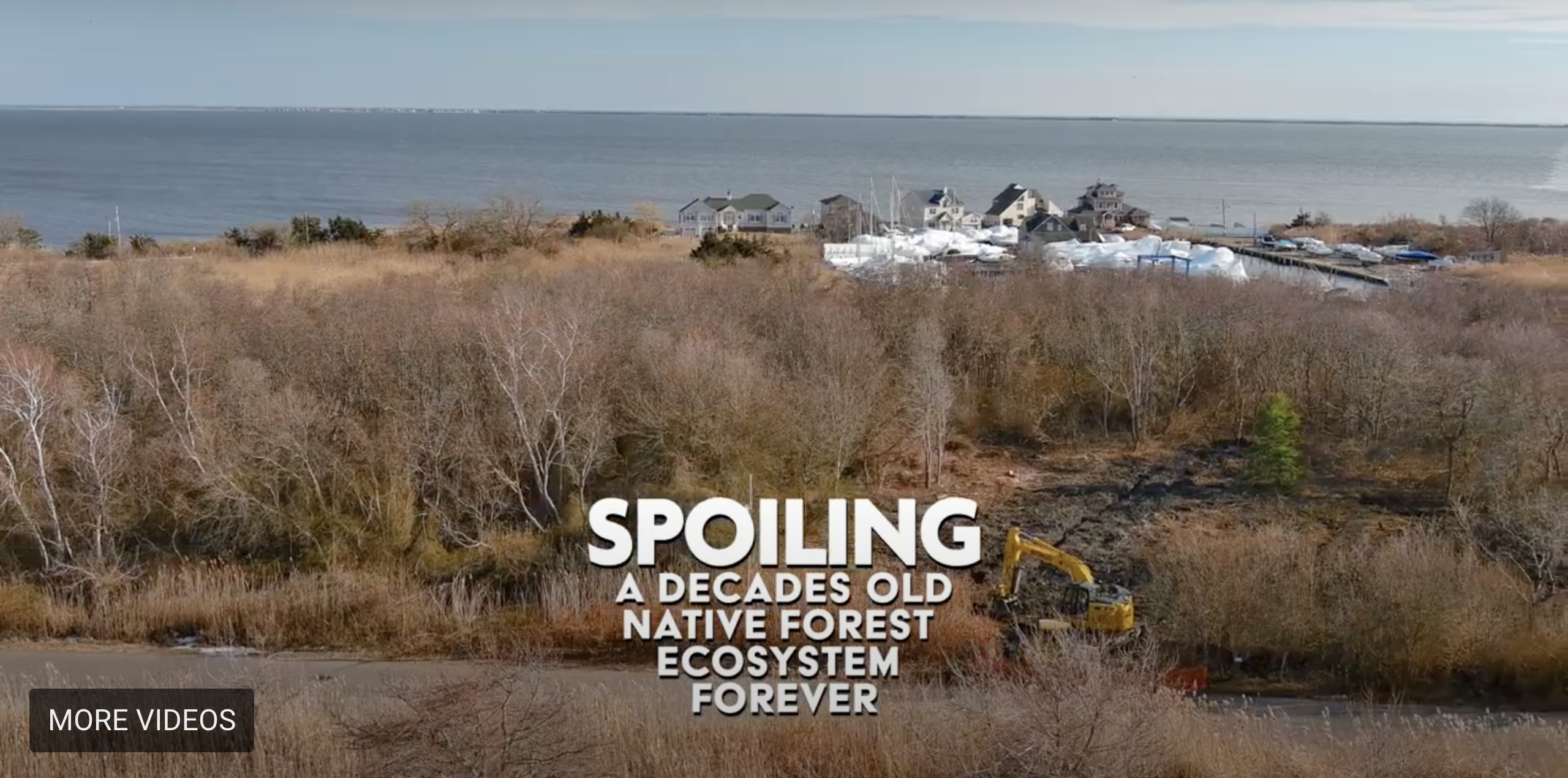
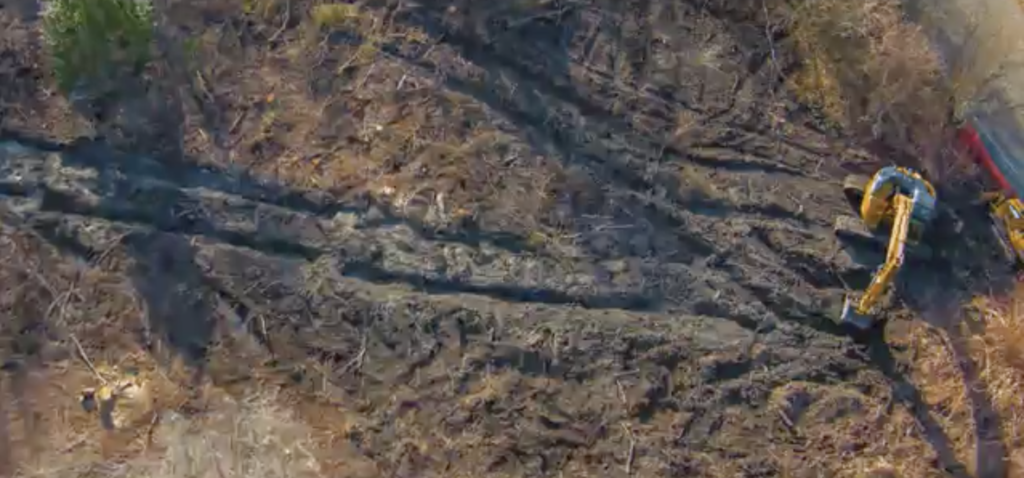
— Images generously provided by Stephen Borghardt
We Need To Update Our Thinking and Our Wetlands Regulations
By the time the 9 acre freshwater wetland was discovered, it was “too late.” The decision had been made at the town and county level to dump the dredge spoils here, first bulldozing a mature 40 year old native forest full of turtles and birds overwintering. The map used by Suffolk County indicated was a “designated spoils area.” Despite there being nearby parcels of phragmites infested islands nearby for the spoils, the process of re-permitting was deemed too much of a delay. Had this freshwater wetland been designated as such, it would not have come to this. The maps used by municipalities throughout the state are wildly outdated — decades old. They also set the bar statewide at 12.4 acres. Anything smaller than that is in danger of being built upon / removed.
Knitting Together Fragmented Habitat
There are still vernal ponds left on Long Island that teem with life, but are much smaller than that. We know now that even pockets of habitat can matter, and that they can straddle property boundaries — they are by nature irregular.
Now we are faced with a similar dynamic: There is a lot of political momentum building up around a bill that would revise the mapping of freshwater wetlands so that they more reflected current realities. The budget is about to be finalized. Will this bill be in that package?
Freshwater Wetlands: It’s Not Cookie Cutter
The problem is that this bill (or the Senate version of it) retains the 12.4 acre stipulation. Statewide, developers feel it would hinder them. On Long Island, State Assemblyman Steven Engelbright, a long time champion of the environment and a scientist has offered his own version. It is much more thorough and reflects his usual wisdom.
Even as the momentum builds for the one bill, we would be well advised to take up Assemblyman Engelbright’s. The New York State Legislature and the environmental community need to reckon with the fact that these are very long term decisions. We need to make the better one, even if we have to wait a little longer for the implementation.
Here are the two versions of the bill. Why not choose a bill that would provide these other essential protections? For me, we owe this to the animals that called that forested wetland home, and to the many other creatures statewide that are similarly imperiled because their habitat is less than 12.4 acres:
| Assembly Bill | Senate Bill |
| Protects wetlands 1-acre or larger | Protects wetlands 12.4-acres or larger |
| Adds protection for vernal pools and other temporary wetlands using biological science based criteria | No such protection afforded |
| Adds protection to wetlands that are of “significant importance in protecting the state’s water quality.” | No such protection afforded |
| Includes evidence based criteria to clarify what constitutes “hydric soils” and “hydrophytic vegetation” to aid with jurisdictional determinations | No such clarification included |